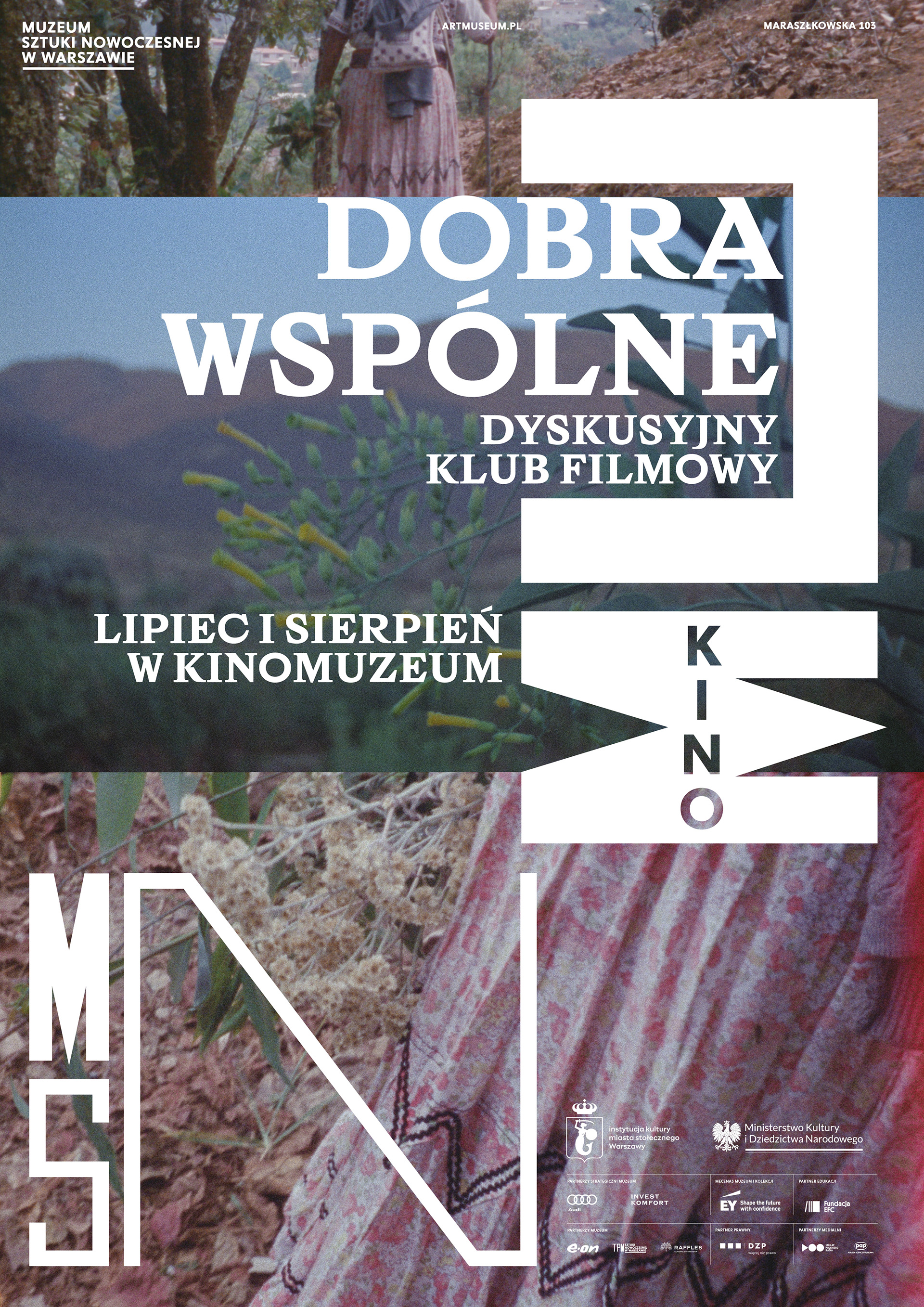
"Common Goods" Discussion Film Club at Museum of Modern Art in Warsaw
Curated by artists Ewelina Węgiel and Weronika Zalewska, the program is devoted to common goods and how communities strengthen their bonds through their relationship with the land, and how their political and environmental fates are intertwined. Observing situated knowledge[1] from Lebanon, Georgia, Poland, and Italy, the film series will evoke local practices of regeneration and resistance, embedded both in the realities of global capitalism and social polarization, as well as attempts to establish dialogue, search for possible pleasures, and constantly reinterpret traditions. Resistance and regeneration feed off each other; they can be one entity with many faces.
The term “goods” contains an important contradiction. The word refers to communally understood, non-monetary commons – in anarchist, socialist, or indigenous ethics of both material (raw materials) and immaterial (language, knowledge) goods, which, in essence, should not be subject to privatization. At the same time, “goods” is a term used in market economics to refer to anything that has become an object. During the film series, the curators will focus on the relationship between what is an object or a subject, and above all, who (or what) and how it becomes an agent.
During each DKF meeting, the curators will present the context for each film shown and invite participants to post-screening discussions.
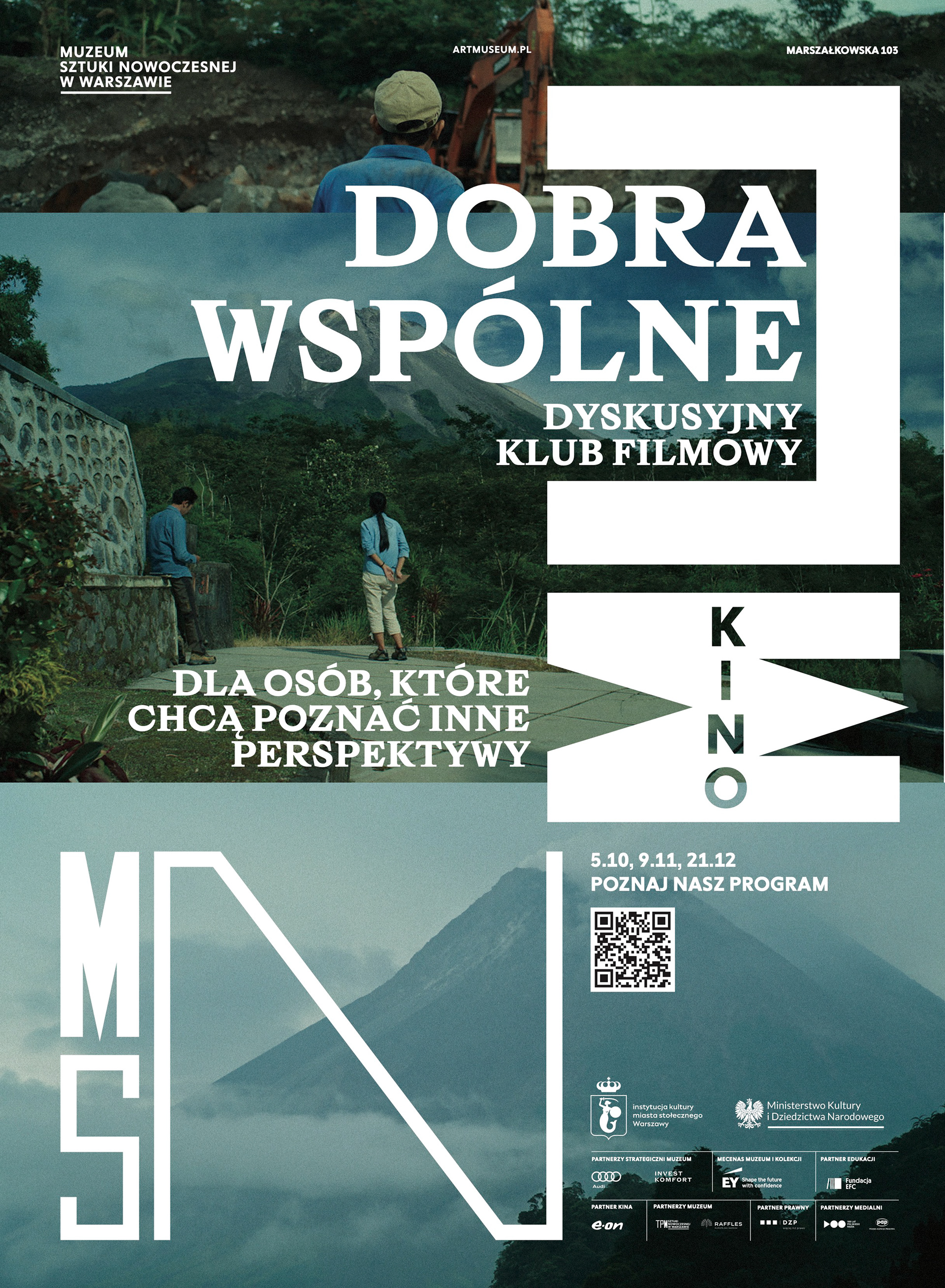
The autumn edition of DKF Dobra wspólne (Common Goods) is held under the slogan “Crushing Systems.”
Outdated infrastructures—ecological, economic, and political—are crumbling before our eyes. The sense of decline is no longer abstract, but a direct, tangible, and undeniable experience. And yet, amid the ruins, people continue to live, tell stories, resist, and imagine other worlds. The films in this program examine this very condition—they show that survival arises not only from necessity, but also from creativity, collective memory, and political imagination. Together, they emphasize that rebirth grows out of resistance, and new worlds take root in the rubble of old ones.
Storytelling is particularly important today because it allows us to name what systems of power try to hide or forget, reveals invisible bonds between people, the earth, and the spirits of the past, and creates a space where the experience of crisis can be transformed into collective imagination and acts of political resistance.
In the fall edition of DKF Dobra wspólne, we will see three films: Monism by Riar Rizaldi, Planet by Amalia Ulman, and Uncanny Object at Noon by Apichatpong Weerasethakul. These are projects by visual artists and filmmakers who point their cameras at places close to them, where crises are escalating: armed conflicts and paramilitary violence, exploitation of natural resources, political repression, authoritarianism, and economic instability. Combining everyday life with fiction, they tell stories that broaden our field of vision and allow us to think differently about the experiences of breaking down systems, preserving worlds, and sowing revolution. The curators believe that breaking down narratives—especially those rooted in monoculture—is an integral part of breaking down systems of oppression.

Nap | Exhibition of Students of the Department of Experimental Film at the University of Arts in Poznań
March 6–15, 2026
opening: March 6, 2026, 6:00 p.m.
Artists: Roch Adamczak, Julita Adaszak, Krzysztof Badowiec, Bartosz Bućko-Łoś, Julia Borowska, Iga Brzozowska, Zuzanna Czarczyńska, Maja Drejer, Alicja Gajda, Maja Kasprzak, Blanka Kęstowicz, Kinga Klajbor, Hubert Klimczak, Hanna Klewiado, Borys Korzyb, Zofia Kulesza, Bruno Kuzyszyn, Kalina Lamentowicz, Jędrzej Lisowski, Sofya Maroz, Adrianna Metryka, Julia Mendyk, Tymon Modrzyński, Antoni Możdżeń, Natalia Nalepka, Izabela Nykiel, Julia Opania, Antoni Orlof, Malwina Postaremczak, Zuzanna Sakowicz, Miriam Szypryt, Joanna Suppan, Filip Świadek, Bartek Walczak, Hugo Woźniak, Maksymilian Zdanowski, Julia Zioła, Jakub Żwirełło
Curator - Ewelina Węgiel
Content and coordination support: Anna Konik, Sławomir Sobczak
Artists take viewers—and themselves—on a three-hour-long nap. It is a state of heightened sensitivity in which linear narrative gives way to associations and emotions—a suspension between wakefulness and sleep, individual experience and collective experience.
Experimental film requires a different kind of understanding. Devoid of classical narrative, it sometimes operates specially — bending, stretching, and looping time — making viewing a practice of duration and presence.
Sleep can be a way of being together, a form of tender suspension.
Experimental film requires a different kind of understanding. Devoid of classical narrative, it sometimes operates specially — bending, stretching, and looping time — making viewing a practice of duration and presence.
Sleep can be a way of being together, a form of tender suspension.