coal
12min, 20min, video, 2024
Hi,
It’s us, Coal Mines (they, them)
In 1960, geologists discovered coal seams
In 1977, we were founded.
In 1980, we were mined for the first tons of brown coal.
On December 14, 2013, an additional billion tons of brown coal was mined.
Deep within our depths, there are many spirits of the living and the dead, human and non-human. Now we call on them to come here.
We speak to all the sad, the suffering, the dying, the traumatized.
To you.
(video excerpt)
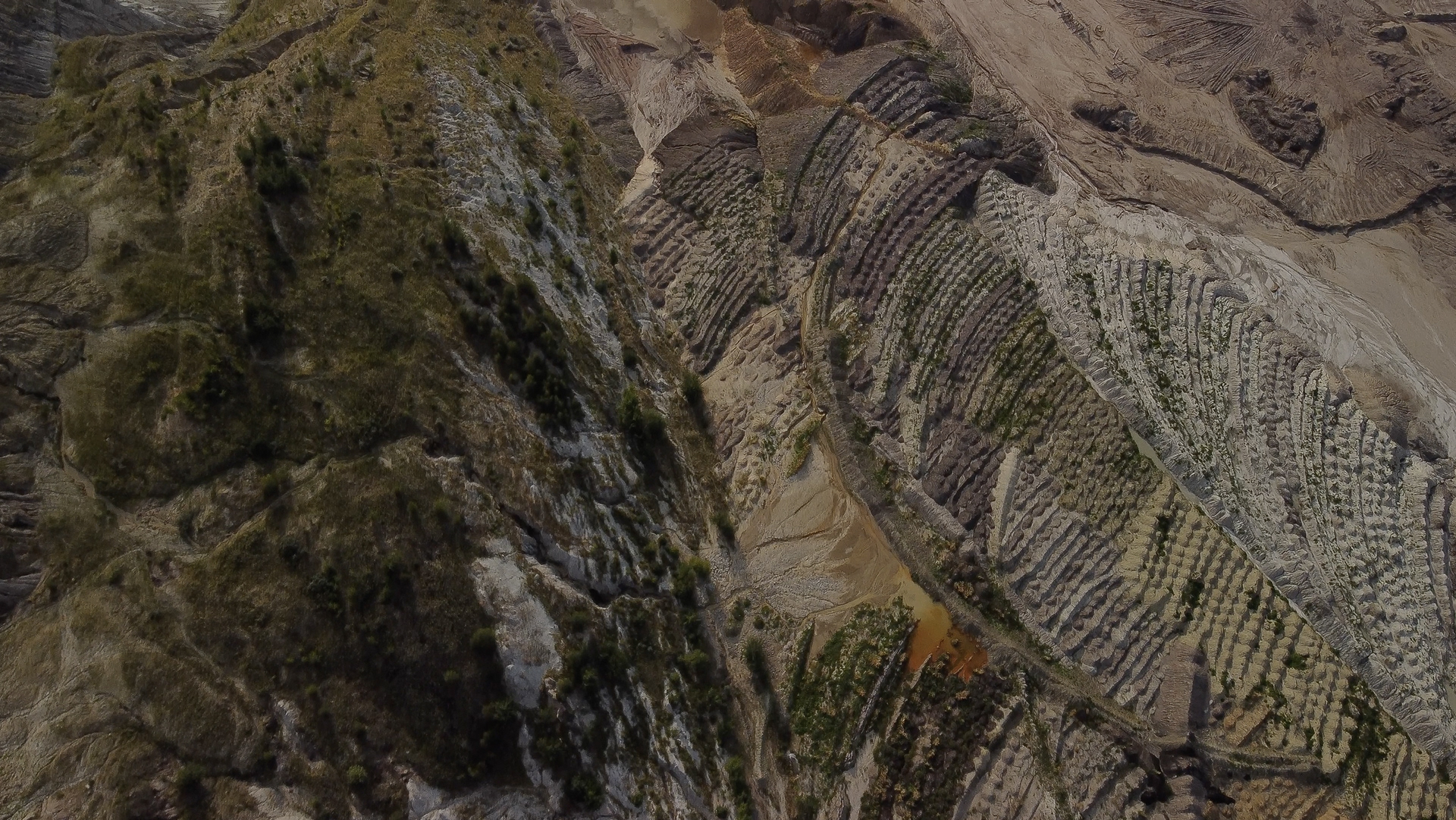
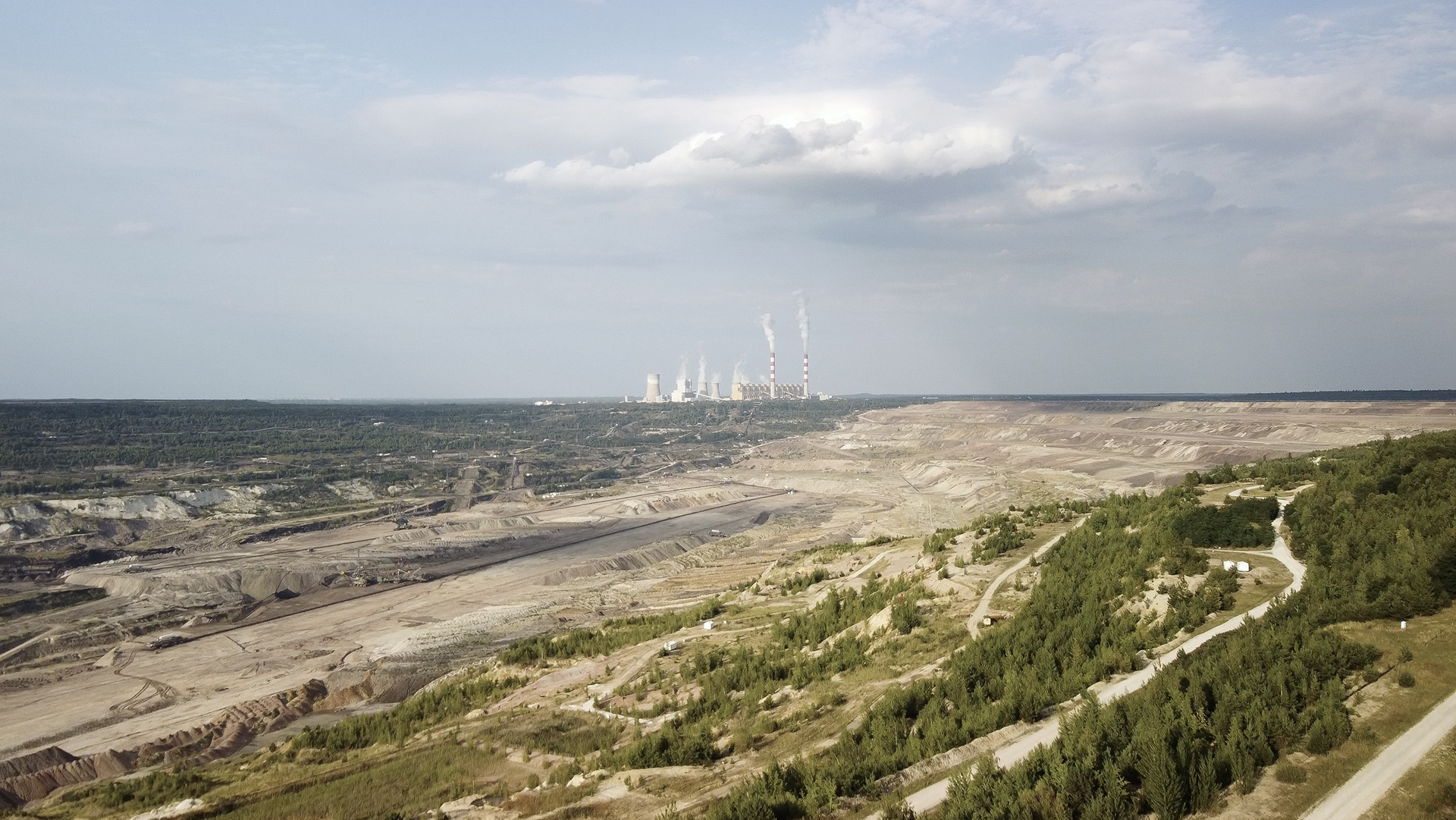
A coal mine, the very end of the world, an area completely devastated by human invasion 300 meters deep. The mining and subsequent burning of the history of the world. The central themes of Ewelina Węgiel’s work are coal mines and the stories entwined with them. Focusing primarily on the Bełchatów mine, the author explores not only its environmental issues, but especially its social and spiritual dimensions, embedded in the mine’s rich history and culture.
Ewelina Węgiel (węgiel means coal in Polish) focuses on the magical and spiritual entities present in the mine environment. They conceal a multitude of stories that circulate among people, often displaced mine inhabitants, and that also involve non-human beings. These narratives are often preserved in tales, allowing for a much closer connection to previous generations than dry history texts or chronicles can offer. Folk tales, legends and fables are an important source of knowledge and inspiration for the author, as well as a way to get closer to the history of a place and its inhabitants.
The video depicts the coal mine and its surroundings. Through layered perspectives, the viewer peers into the bowels of one of Earth’s most ravaged places, beyond which the seemingly ordinary landscape and forest continue. The slow and eerie shots of the impact of human activity that has created a wasteland that transcends the mine’s local location feel somewhat contemplative but are distressingly apocalyptic in nature.
Link: https://youtu.be/7eaN4z8T8mw (20min)